Types of Yoga: A Complete Guide to Every Style and Which One Is Right for You
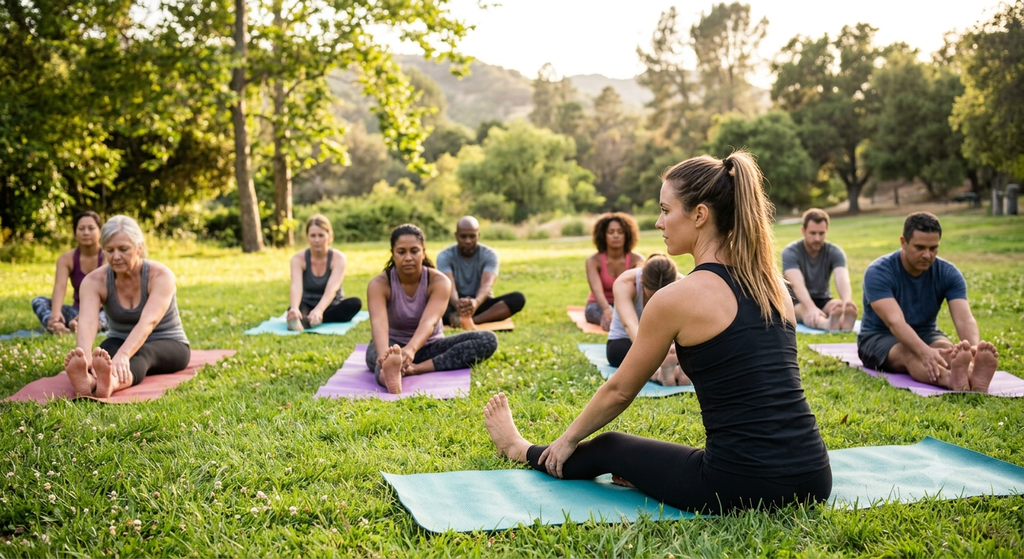
Yoga isn’t a single practice — it’s an umbrella term covering dozens of styles, each with its own pace, philosophy, and physical demands. Whether you’re looking for a calming stretch, an intense sweat session, or a spiritual practice rooted in ancient tradition, there’s a type of yoga built for it.
In this guide, we’ll break down the most popular types of yoga, explain the different types of yoga and how they differ from one another, and help you figure out which style actually fits your goals — flexibility, strength, stress relief, or weight loss.
What Are the Main Types of Yoga?
The most common types of yoga are Hatha, Vinyasa, Ashtanga, Bikram (Hot Yoga), Yin, Kundalini, Iyengar, Restorative, Power Yoga, and Aerial Yoga. Each style varies in intensity, pacing, and focus — ranging from slow, meditative stretching to fast-paced, sweat-inducing flows.
1. Hatha Yoga — Best for Beginners
Hatha is the foundational style most other yoga types are built on. Classes move at a slower pace, holding each pose for several breaths, making it ideal if you’re new to yoga.
- Intensity: Low to moderate
- Best for: Beginners, stress relief, learning proper alignment
- What to expect: Basic postures, breathing exercises, and light meditation
2. Vinyasa Yoga — Best for Flow and Cardio
Vinyasa links breath with movement, flowing from one pose to the next without pausing. It’s often called “flow yoga” because of its continuous, dance-like sequences.
- Intensity: Moderate to high
- Best for: Building strength, improving cardiovascular endurance
- What to expect: No two classes are exactly alike; sequences vary by instructor
3. Ashtanga Yoga — Best for Discipline and Strength
Ashtanga follows a fixed sequence of postures performed in the same order every time. It’s physically demanding and requires consistency.
- Intensity: High
- Best for: Experienced practitioners who want structure and a rigorous workout
- What to expect: Six set sequences, each more advanced than the last
4. Bikram / Hot Yoga — Best for Detox and Sweat
Practiced in a heated room (often 105°F/40°C with high humidity), Bikram follows a set 26-pose sequence, while “Hot Yoga” is a more flexible variation of the same concept.
- Intensity: High
- Best for: Detoxifying sweat sessions, improved flexibility from heat
- What to expect: Intense heat, consistent posture sequence, high hydration needs
5. Yin Yoga — Best for Deep Stretching
Yin is a slow-paced style where poses are held for 3-5 minutes or longer, targeting connective tissue rather than muscles.
- Intensity: Low
- Best for: Deep flexibility, joint mobility, relaxation
- What to expect: Long holds, minimal movement, meditative pacing
6. Kundalini Yoga — Best for Spiritual Practice
Kundalini combines physical postures, breathing techniques, chanting, and meditation to focus on awakening energy at the base of the spine.
- Intensity: Moderate
- Best for: Spiritual growth, mental clarity, stress management
- What to expect: Repetitive movements, mantras, breathwork (“pranayama”)
7. Iyengar Yoga — Best for Alignment and Injury Recovery
Iyengar emphasizes precise alignment and often uses props like blocks, straps, and bolsters to help practitioners hold poses correctly.
- Intensity: Low to moderate
- Best for: Injury recovery, therapeutic yoga, alignment-focused practice
- What to expect: Slow pacing, heavy use of props, detailed instruction
8. Restorative Yoga — Best for Relaxation and Sleep
Restorative yoga uses props to fully support the body in passive poses, allowing deep relaxation with almost no physical effort.
- Intensity: Very low
- Best for: Stress relief, better sleep, nervous system recovery
- What to expect: Long holds (5-20 minutes), heavy prop use, minimal movement
9. Power Yoga — Best for Weight Loss and Fitness
A Westernized, fitness-focused version of Ashtanga, Power Yoga strips away the spiritual elements and emphasizes strength and calorie burn.
- Intensity: High
- Best for: Weight loss, muscle toning, athletic cross-training
- What to expect: Fast-paced sequences, minimal rest, gym-like atmosphere
10. Aerial Yoga — Best for Fun and Core Strength
Aerial yoga incorporates a hammock or suspended fabric to support poses, allowing for inversions and deeper stretches with less strain.
- Intensity: Moderate
- Best for: Core strength, spinal decompression, trying something new
- What to expect: Suspended poses, playful atmosphere, some initial adjustment
Types of Yoga Compared: Which One Should You Choose?
| Yoga Style | Intensity | Best For | Pace |
| Hatha | Low-Moderate | Beginners | Slow |
| Vinyasa | Moderate-High | Cardio & Flow | Fast |
| Ashtanga | High | Discipline & Strength | Fast |
| Bikram/Hot | High | Detox & Sweat | Moderate |
| Yin | Low | Deep Stretching | Very Slow |
| Kundalini | Moderate | Spirituality | Moderate |
| Iyengar | Low-Moderate | Alignment & Recovery | Slow |
| Restorative | Very Low | Relaxation & Sleep | Very Slow |
| Power Yoga | High | Weight Loss & Fitness | Fast |
| Aerial | Moderate | Fun & Core Strength | Moderate |
Frequently Asked Questions
What are the 5 main types of yoga? The five most commonly practiced types are Hatha, Vinyasa, Ashtanga, Bikram (Hot Yoga), and Yin Yoga. These cover the widest range of intensity levels and goals, from gentle stretching to high-intensity flow.
Which type of yoga is best for beginners? Hatha Yoga is generally considered the best starting point because of its slower pace and focus on foundational poses and breathing techniques.
What type of yoga burns the most calories? Power Yoga and Vinyasa Yoga tend to burn the most calories due to their fast-paced, continuous movement and higher intensity.
Is there a type of yoga just for flexibility? Yin Yoga and Iyengar Yoga are best suited for improving flexibility, since both focus on long holds and deep stretching of connective tissue and muscles.
What’s the difference between Hatha and Vinyasa yoga? Hatha yoga holds poses individually at a slower pace, while Vinyasa links poses together in a continuous, flowing sequence synced with breath.